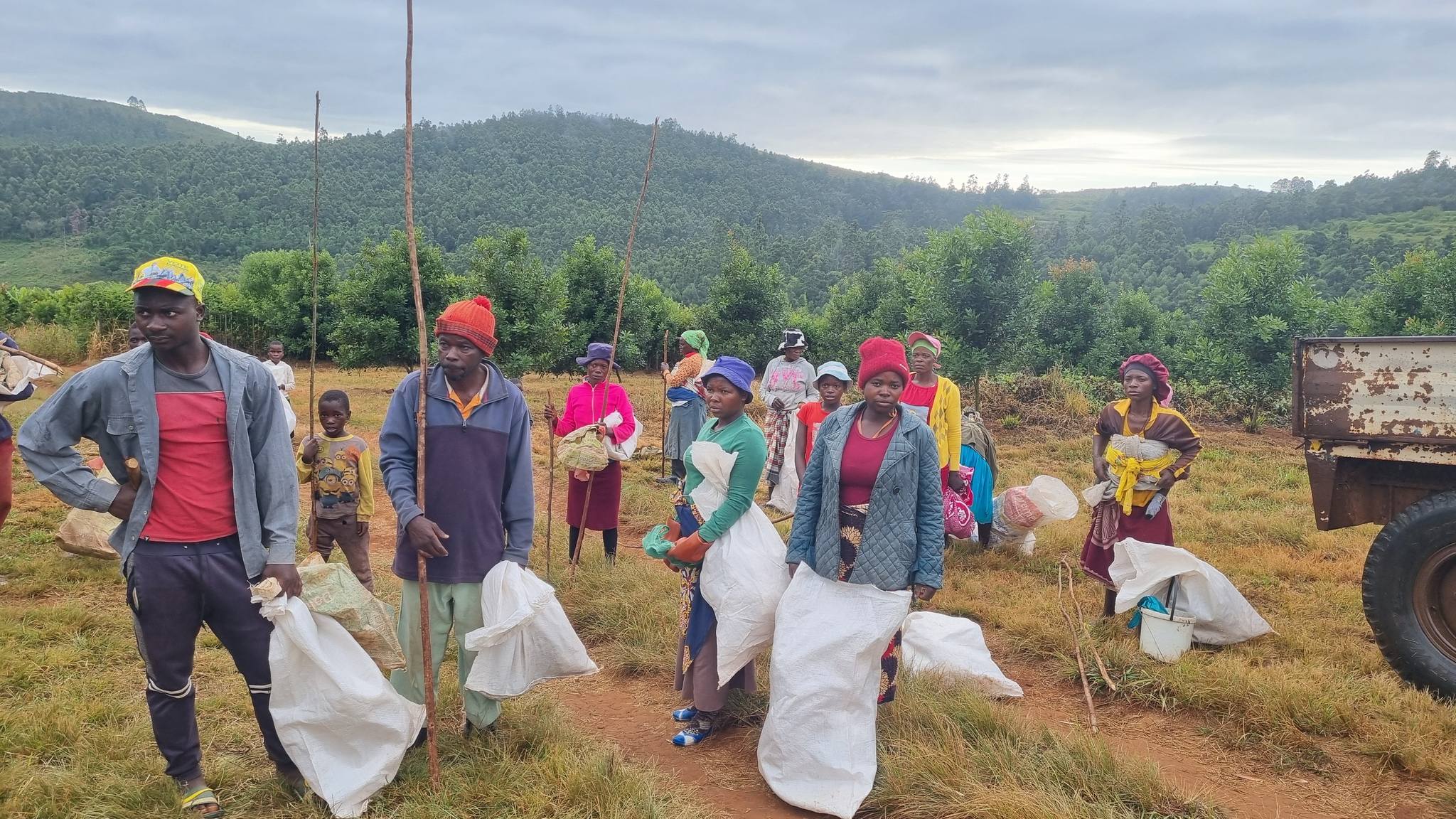
For several years we have exported macadamia nut-in-shell from our own orchards: 80 hectares, more than 20,000 trees, at around 1,100m in Zimbabwe's Eastern Highlands near Chipinge. That estate remains the reference — the lots we know from block and harvest date through dehusking, Advanced AI Curing, and export grading. We are now also buying from neighbouring Zimbabwean growers and putting their crop through the same plant, against the same specification, so a UK or EU buyer can book a larger Zimbabwean stem without shopping a string of small farms.
This is not a silent blend and it is not a broker bag with “Africa” on the label. Estate lots and neighbour-grower lots are kept as lots. You can ask for Umkondo estate only, or for a Chipinge book that includes named growers who have met the intake standard. The dryer and the grader do not change.
Why we opened the book
One well-run estate can supply a serious trial and a meaningful season programme. It cannot, on its own, fill every UK importer or EU processor who wants Zimbabwean origin as a second African stem. Around us in Chipinge and the wider highlands are growers who produce the same cultivars — Beaumont (695) and A-series — but who have historically sold wet or partly dried nut-in-shell into a long chain of agents. That chain is exactly where farm-gate prices have been crushed; we covered that in growers pushing back on farm-gate prices and in the case for direct trade.
Taking neighbour crop into our plant does two jobs at once. It gives the overseas buyer more Zimbabwean volume with one commercial contact, one spec, and one document set. It gives the local grower a route to export-grade drying and a price that is set from the container, not from the orchard-gate bid of a middle-man.
The standard does not flex
Intake from other producers is not “close enough”. Neighbour lots go through the same dehusking, the same in-shell drying programme to ≤2% kernel moisture, and the same size and defect grading as our own. If a delivery does not make the grade, it does not go in an export bag with our spec sheet on it. Kernel recovery, moisture and defects are the same numbers we publish for estate crop — see NIS specifications. UK and EU buyers who have already approved a sample from Umkondo can therefore trial a mixed Chipinge book without treating it as a new origin from scratch; the plant and the spec are the same. How to run that trial is in how to trial a new supplier from Zimbabwe.
Traceability: named lots, not a soup
Every export lot can be traced to harvest period and to either our orchard blocks or a named participating grower. That is the point of a grower-exporter network as opposed to a commodity blend. If something is wrong in a container, we can go back to a dryer run and a grower, not to “various African farms”. For retailers and brand owners in the UK and EU who now ask where the nut came from and whether the grower was paid properly, that is the answer we can actually stand behind.
What to ask for on the enquiry
Say whether you want estate-only lots, or a Chipinge book that may include neighbour growers under the same spec. Give grade, volume and destination port (UK or EU). We quote FCA Chipinge as standard, with FOB Beira/Durban and CIF to Felixstowe, Rotterdam, Antwerp or Hamburg on request. Why a second African origin belongs on a UK book at all is in why UK macadamia buyers are adding a second African origin.
Current grades are on the products page. Send a trade enquiry and we will tell you what we can book from estate and from the grower network for the weeks you need.