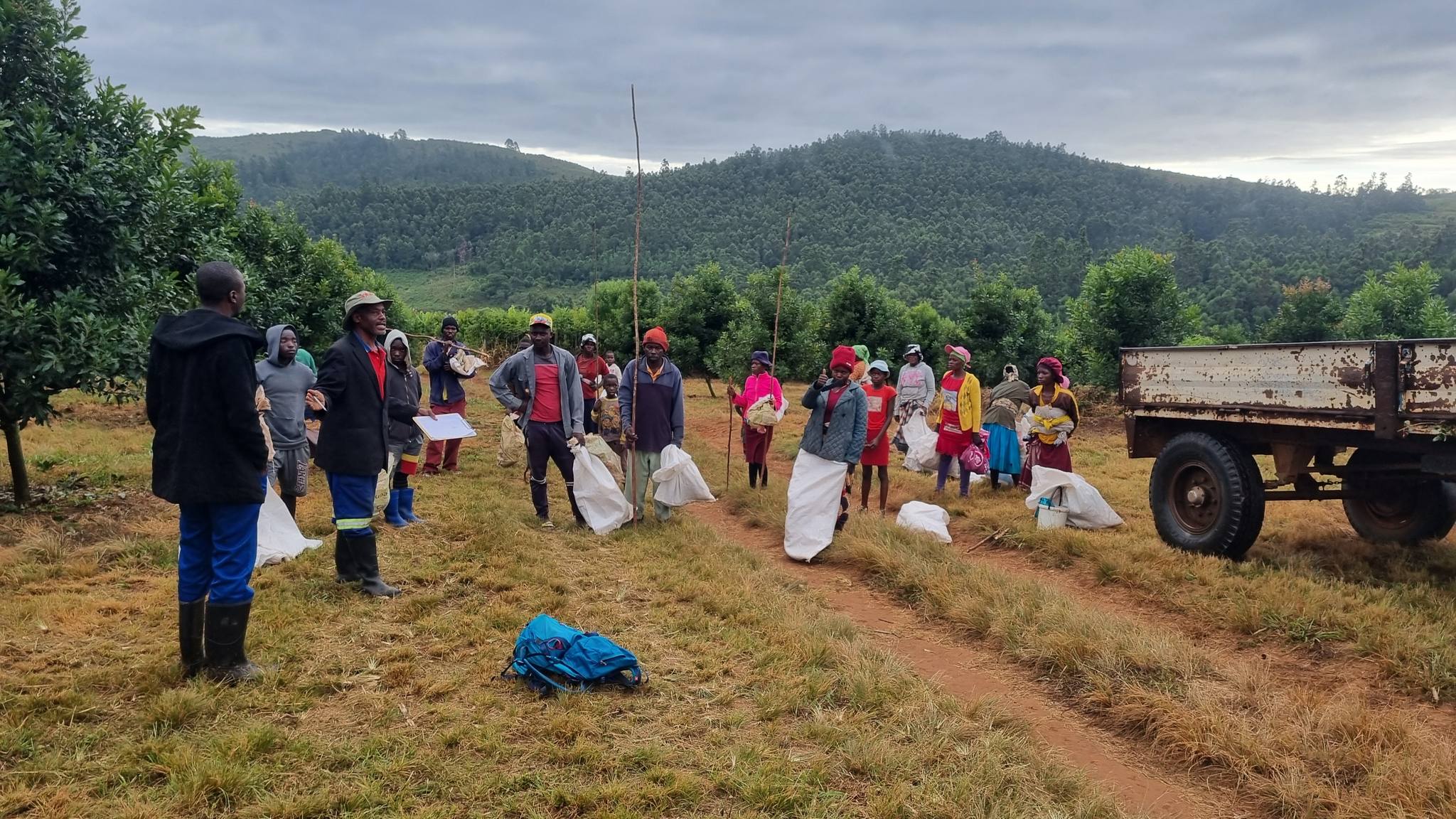
Most buyers who say they are “willing to try a new supplier” mean something more precise: they will run a test if the test cannot take down a roast, a packing week, or a retailer listing. That is a reasonable bar. This is how we suggest you trial Zimbabwean macadamia nut-in-shell from Umkondo Estate — our own crop and, where volume requires it, neighbour Chipinge growers dried and graded to the same specification.
The sequence is the same whether you are a UK importer, a specialised broker, a commercial roaster or a snack packer. Do not skip the sample. Do not jump from a 2kg bag to a season book.
1. Sample and spec sheet first
Ask for a 1–2kg sample of the grade you actually buy — not a show bag of the prettiest nuts in the shed. We send it with a spec sheet stating size grade, kernel moisture, tested kernel recovery and defect tolerance. Roast it, crack it, and compare it to your current South African or Kenyan stem on the measures you already use: appearance, oil, flavour after roast, and how the shell behaves in your cracker. Our NIS specifications explainer and moisture guide are the same numbers we grade against: in-shell drying to ≤2% kernel moisture, kernel recovery typically above 30% on well-managed Beaumont-led lots.
2. Write the spec before anyone books a container
Agree in writing: size (for example premium >22mm versus a graded blend), maximum kernel moisture, minimum kernel recovery, defect cap, packaging (usually one-tonne bulk bags in a 20-foot container), Incoterm, and destination port. A trial that starts with “send us a container of mixed” is how disputes start. If you pack snacks, specify shell appearance and size uniformity. If you crack for kernel, specify recovery and moisture — those two numbers dominate your yield. Grades are published on the products page, from premium >22mm through high-recovery select to commercial mixed.
3. Inspection on the first stem, not as a surprise
For a first container we expect a third-party inspection (SGS or Intertek) on request, against the agreed spec, before the box sails. That is cheaper than arguing about a lot on the dock at Felixstowe or Rotterdam. Build the inspection into the trial quote so it is not a last-minute extra.
4. One trial container, then decide
A 20-foot box is about 18–20 tonnes of NIS — enough to run a real production trial, not so much that a fail wrecks the quarter. From Chipinge the inland leg is to Beira (Mozambique) or Durban (South Africa), then sea to the UK (Felixstowe, London Gateway, Southampton) or to Rotterdam, Antwerp or Hamburg. Transit is typically in the region of four to five weeks depending on routing. Order ahead of the week you need the nuts on the floor. Documentation for UK versus EU imports differs; your importer of record handles the UK or EU declaration, and we make sure the commercial set lines up. The logistics checklist is in exporting macadamias to Europe; UK-specific origin thinking is in why UK buyers are adding a second African origin.
5. What a fail looks like — and what it does not
A fail is moisture above the agreed cap, recovery materially below the spec, or a defect rate that your cracker or packer cannot live with. Those are measurable. A fail is not “it tastes slightly different from our usual South African lot” on a single roast if the spec was met. New origin always tastes like itself. Give the trial a written pass/fail against the spec, then a separate commercial conversation about whether you want more of that flavour profile in the book.
6. Only then book the rest of the season
If the trial container meets spec, we can hold or schedule further lots from the same harvest — estate blocks and, where you need more volume, named Chipinge growers put through the same dryer and grader. How that network is organised is in estate and neighbour growers. Do not sign a season-long volume on the strength of a sample alone; do not leave a successful trial sitting while the premium grades are booked elsewhere.
To start: send a trade enquiry with the grade you want to trial, an indicative annual volume, and your destination port. We respond within 24 hours with a sample arrangement and a quote. The spec sheet is also available as a download.