The story of 2026's macadamia market — farm-gate prices below the cost of production while European kernel prices hold firm — is not, at heart, a story about greed or a single bad actor. It is a story about chain length. The more hands a nut passes through between the orchard and the buyer, the more places value can pool along the way, and the less of the final price finds its way back to the farmer who grew it. Direct trade attacks that problem at its root, and it is the model we are built around.
What "direct trade" actually means here
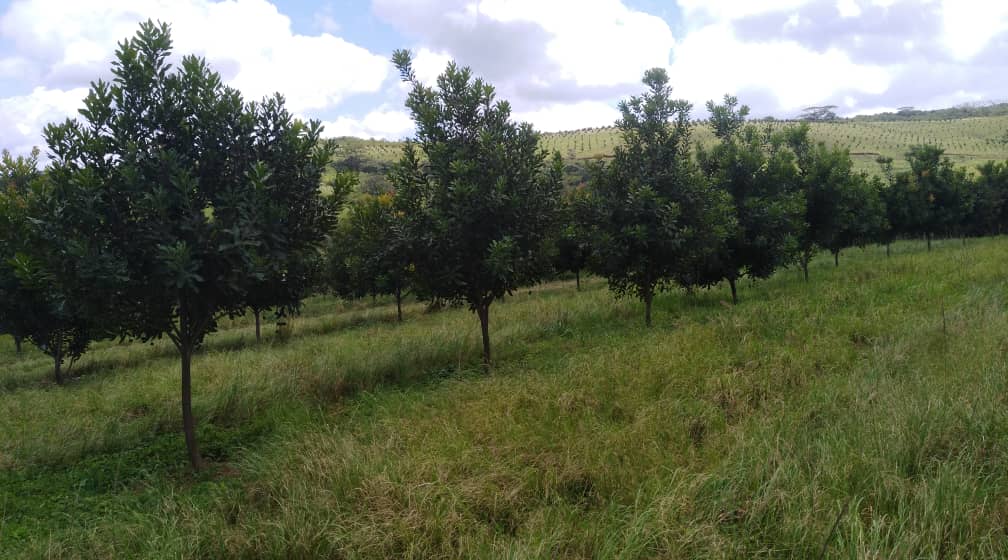
At Umkondo Estate we grow, dehusk, dry, grade and export our own crop from a single 80-hectare estate of more than 20,000 trees in Zimbabwe's Eastern Highlands. There is no chain of buying agents between the tree and the container. That means two things at once: the export value comes back to the farm rather than being skimmed at each hand-off, and a European buyer can see exactly what they are paying for — right down to the orchard block, cultivar and harvest date behind their shipment. Our exporter guide explains that single-origin model in detail.
Why this is a better deal for growers
Controlling the crop through to export is the strongest possible answer to a weak farm gate. We are not selling wet nut-in-shell into a buyer's market at the orchard door; we are shipping a finished, graded, moisture-controlled export product on our own timing, and the realised export price accrues to the estate that did the work. It is the same logic we would urge on any smallholder or grower group weighing up collective action: the closer you get to the buyer, the more of the value you keep.
Why it's a better deal for European buyers too
Direct trade is not charity — it is a better commercial proposition for the buyer as well. Sourcing through a long broker chain means paying for every margin between the farm and your door and being unable to see what the grower received. Buying from the grower-exporter compresses that cost stack into a keener landed price, and it hands you a traceability and fair-dealing story that European retailers increasingly demand: you can tell your own customers, truthfully, which farm the kernel came from and that the grower was paid properly. As the sourcing questions from EU retailers get harder — see our export guide for EU-bound buyers — that verifiable origin story is a growing commercial advantage.
What we can back it up with
- Single-origin traceability: one estate, so every container traces to a specific block and harvest date.
- Moisture discipline: every batch cured to ≤2% kernel moisture through our Advanced AI Curing programme — critical on the long sea leg to Europe.
- Size and recovery: Beaumont-led orchards at ~1,100m altitude delivering the large, uniform, high-recovery kernel European snacking and confectionery buyers specify.
- Transparent pricing: we quote FCA Chipinge as standard, with FOB Beira/Durban and CIF to your European port on request.
Talk to us
If the farm-gate story has made you look harder at where your macadamias come from and who gets paid along the way, that is exactly the conversation worth having. Graded lots from the 2026 harvest are being booked now. Current grades and indicative pricing are on our products page, and we respond to trade enquiries within 24 hours with a quote and sample arrangement.