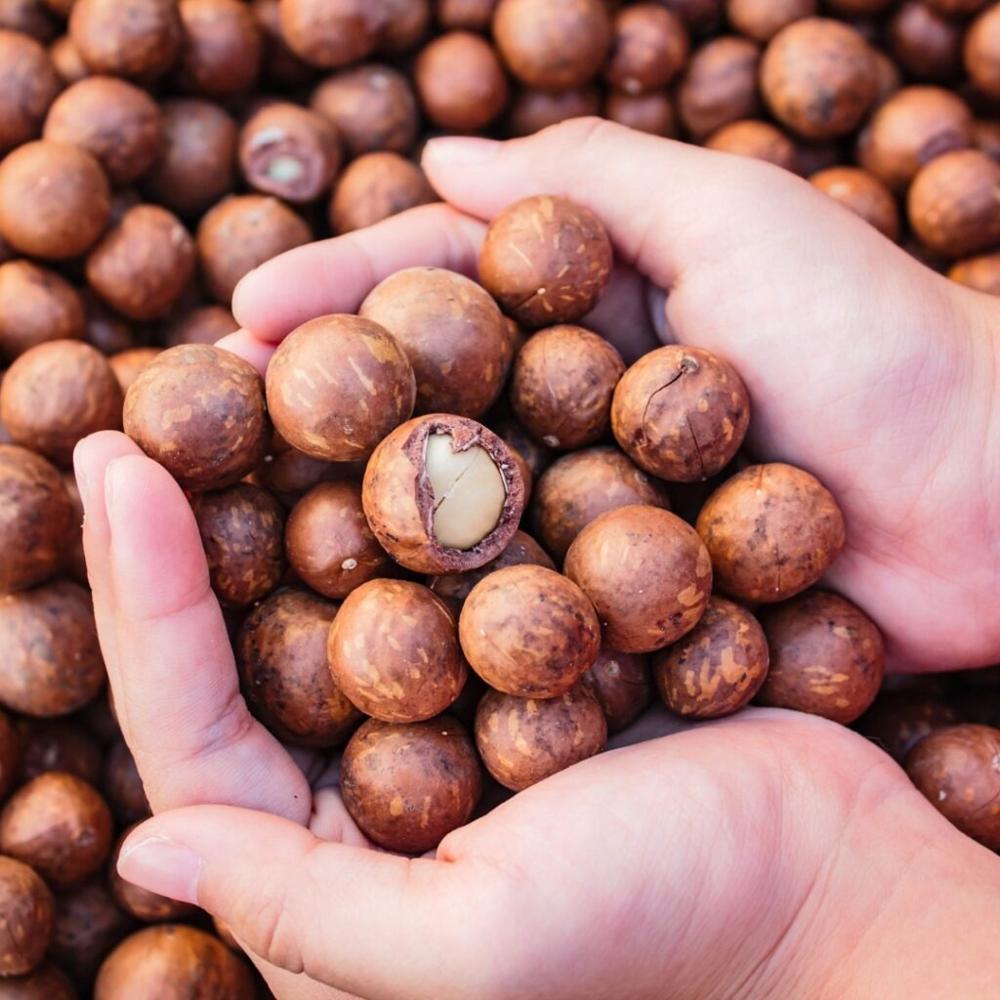
Sourcing macadamias into Europe involves a longer supply chain than sourcing within the region, but it's a well-established one. Here's what importers and processors need to know when bringing in nut-in-shell from an African origin like Zimbabwe.
Getting from Chipinge to a European port
Zimbabwe is landlocked, so every container starts with an overland leg to the port of Beira (Mozambique) or Durban (South Africa) before it goes to sea. From there, sailings to major European gateways — Rotterdam, Antwerp and Hamburg are the main ones for macadamia cargo — typically take in the region of four to five weeks depending on routing and transhipment. Build that lead time into your ordering calendar; buyers who order to a fixed retail or production date should place orders well ahead of the season they're planning for.
What EU buyers and customs expect
Beyond the standard export document set — commercial invoice, packing list, bill of lading, certificate of origin and phytosanitary certificate — European buyers typically want to see the same quality specifications the rest of the trade relies on: stated kernel moisture, size grade, and tested kernel recovery. Your customs broker or importer of record will handle the EU-side import declaration and duty/VAT calculation under the correct commodity code; a good exporter makes sure the commercial documentation lines up cleanly so that step isn't held up at the border.
Allergen labelling is worth flagging early if you're processing further in Europe: tree nuts are a regulated allergen under EU food law, so downstream labelling needs to reflect the product accurately — this sits with the processor/packer rather than the NIS exporter, but it's a conversation worth having with your supplier at the spec stage.
Certifications that increasingly matter
European retailers and food manufacturers are asking more sourcing questions than they did five years ago. Organic certification, Global G.A.P. and clear farm-level traceability are increasingly requested for premium retail listings, and being able to answer questions about growing practices and origin in detail is now a genuine commercial advantage, not just a compliance exercise. A single-origin grower-exporter is naturally well placed here: we can tell a buyer exactly which orchard block, cultivar and harvest date is behind their container, which a blended broker lot usually cannot.
Documentation checklist
- Commercial invoice and packing list (USD, matched to the agreed Incoterm)
- Bill of lading
- Certificate of origin
- Phytosanitary certificate
- Fumigation certificate where required
- Spec sheet stating size grade, kernel moisture, kernel recovery and defect tolerance
- Third-party inspection report (SGS/Intertek) on request, especially for a first container
Starting a European trade relationship
As with any new origin, start with a sample and spec sheet, then a trial container before committing to season-long volume — our buying guide walks through that process in detail. Current grades and indicative FCA Chipinge pricing (with FOB Beira/Durban and CIF-to-European-port quotes available) are on our products page. Send a trade enquiry with your grade, volume and destination port and we'll respond within 24 hours.